

We live in a world of finite resources. Today’s operations—especially in remote areas—require smarter ways to manage water, waste, and energy. That’s where the idea of a circular economy on remote worksites comes in.
In contrast to a traditional “take-make-dispose” model, a circular economy reduces waste and maximizes resource reuse:
Use Resources → Process → Reclaim → Reuse.
This mindset isn’t just for island nations or urban centers, it’s essential in remote, utility-limited locations like oil & gas camps, solar farms, and industrial job sites.
Why the Linear Model Fails on Remote Worksites
Remote worksites often lack public utility access. So when you…
-
Truck in drinking water
-
Truck out sewage
-
Repeat indefinitely
…you’re stuck in a linear, expensive, unsustainable loop.
This approach increases fuel costs, traffic risks, labor needs, and carbon emissions. Plus, you’re draining more water resources than you return.
Circular Economy in Action: Reuse at the Source
A circular economy on remote worksites works by transforming waste into a resource onsite.
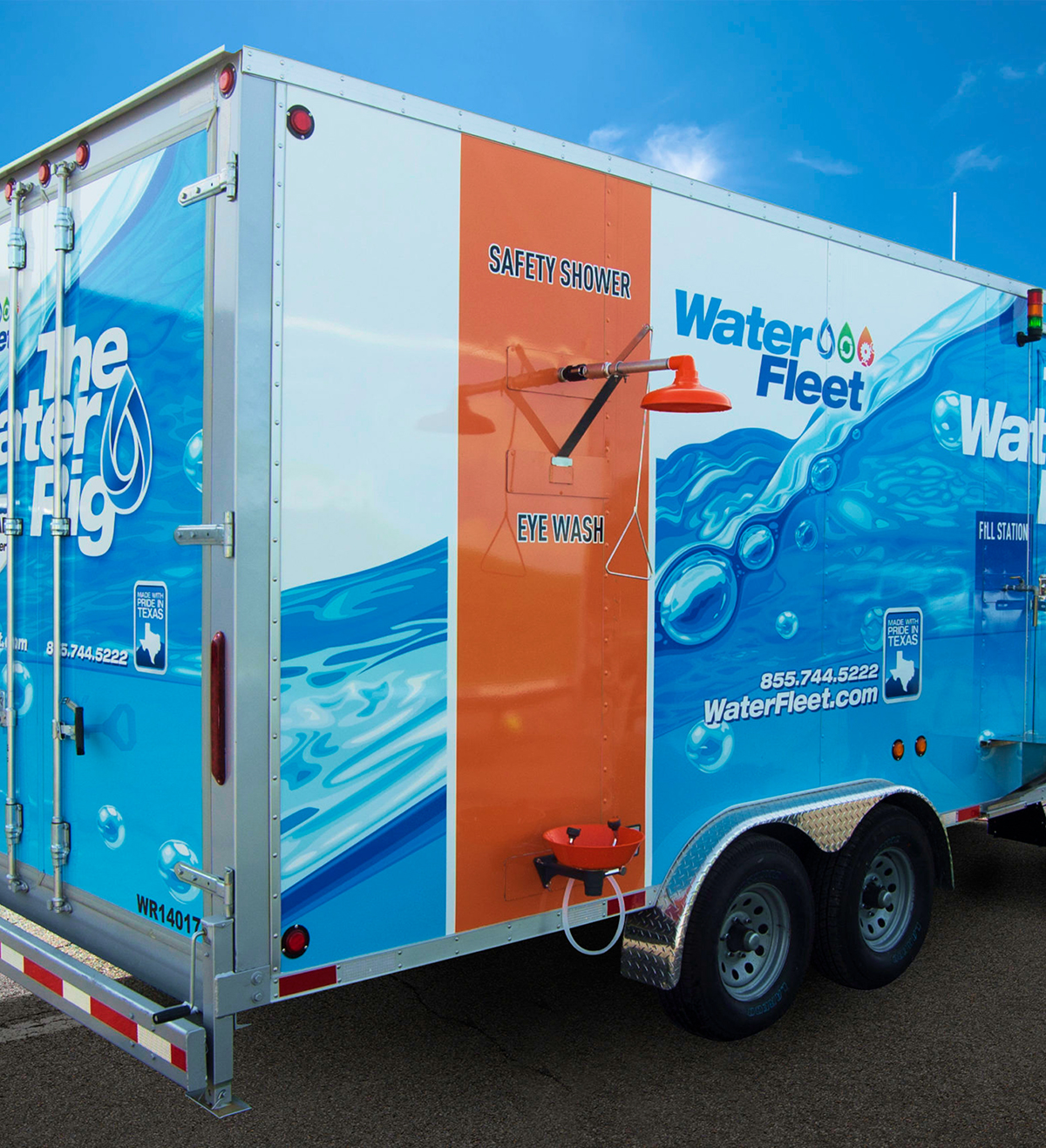
WaterFleet’s mobile utility infrastructure enables this transformation in five steps:
- Source water from a nearby well or brackish supply
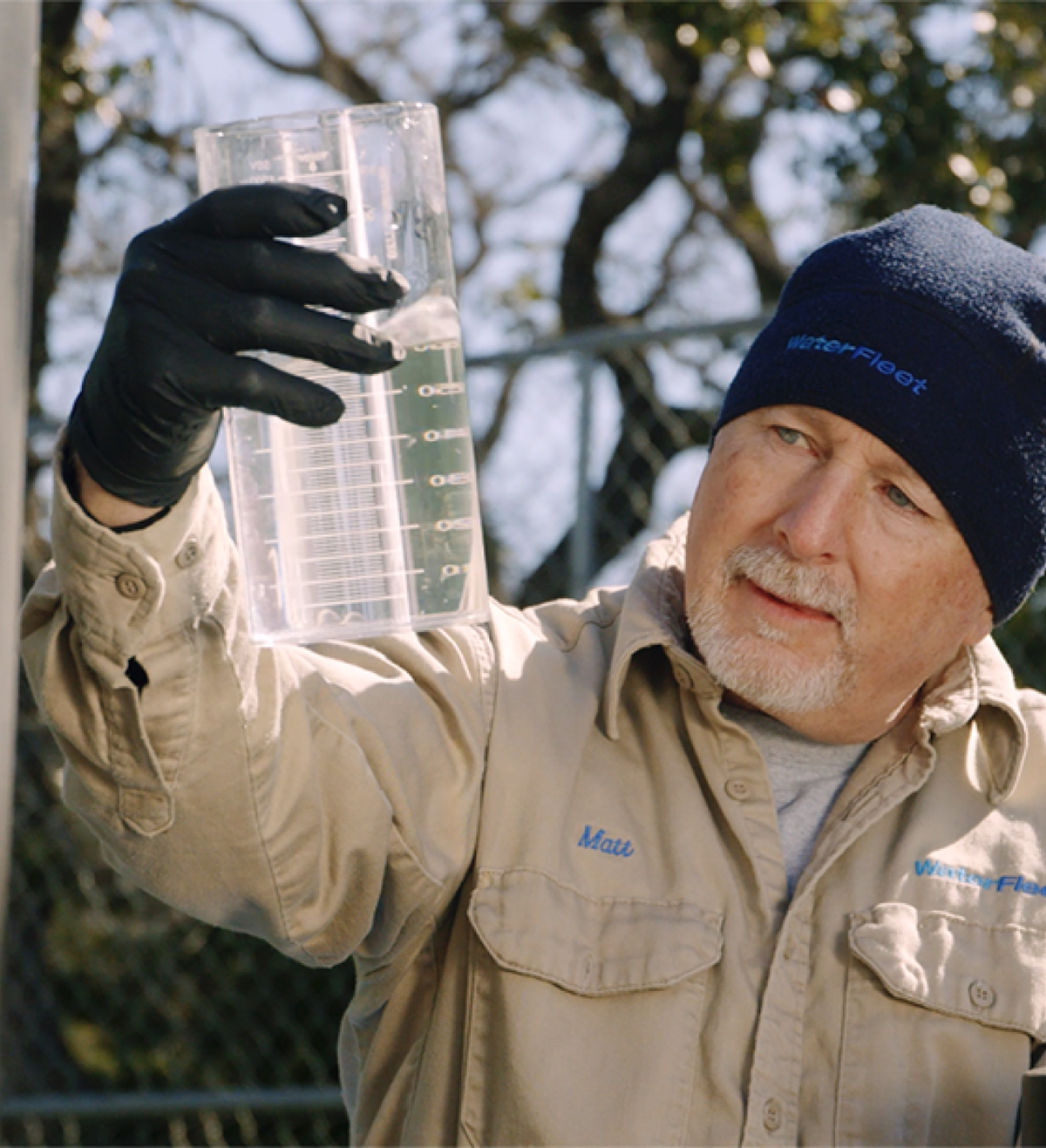
- Treat it to potable standards using WaterFleet’s mobile water treatment system
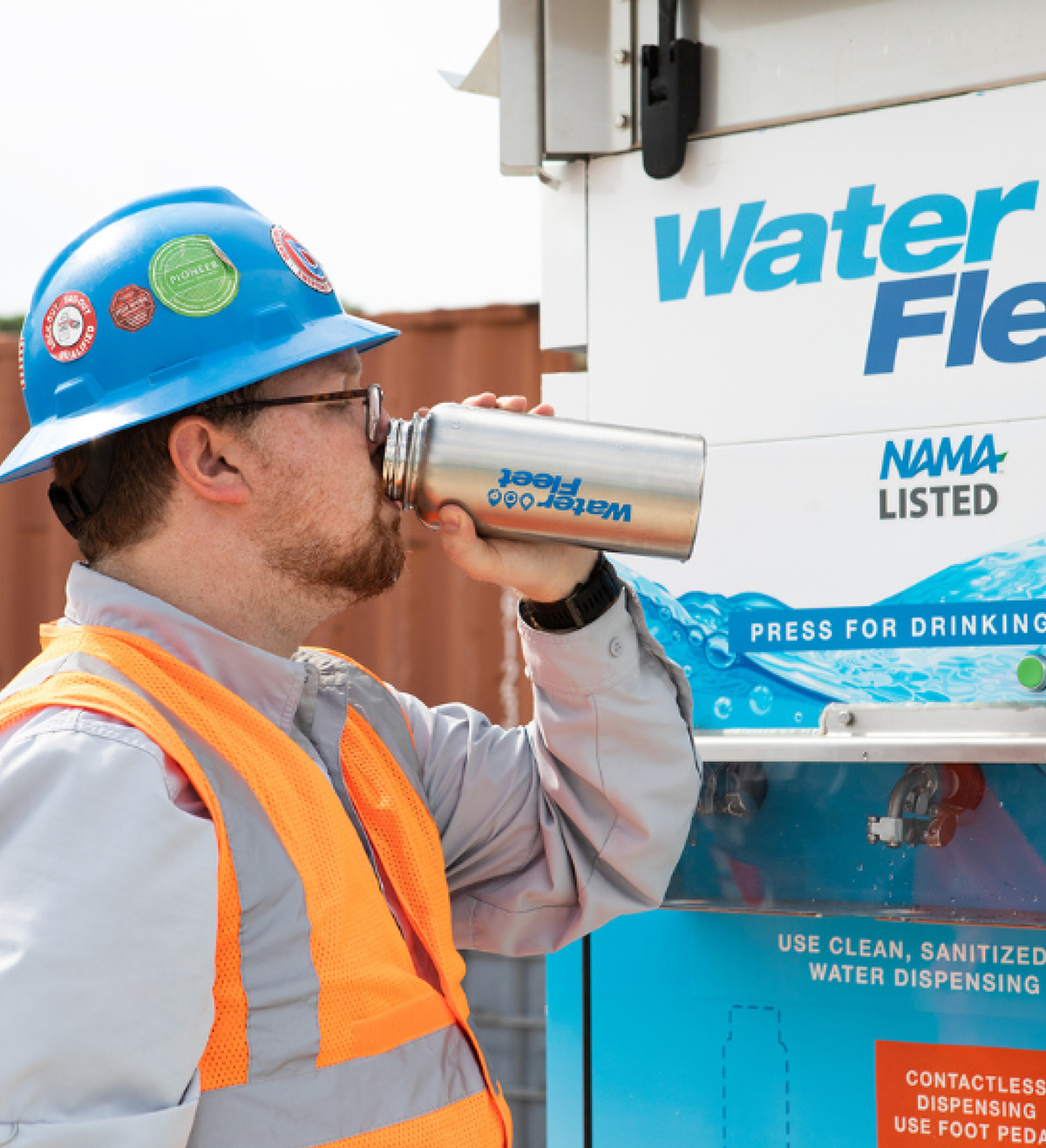
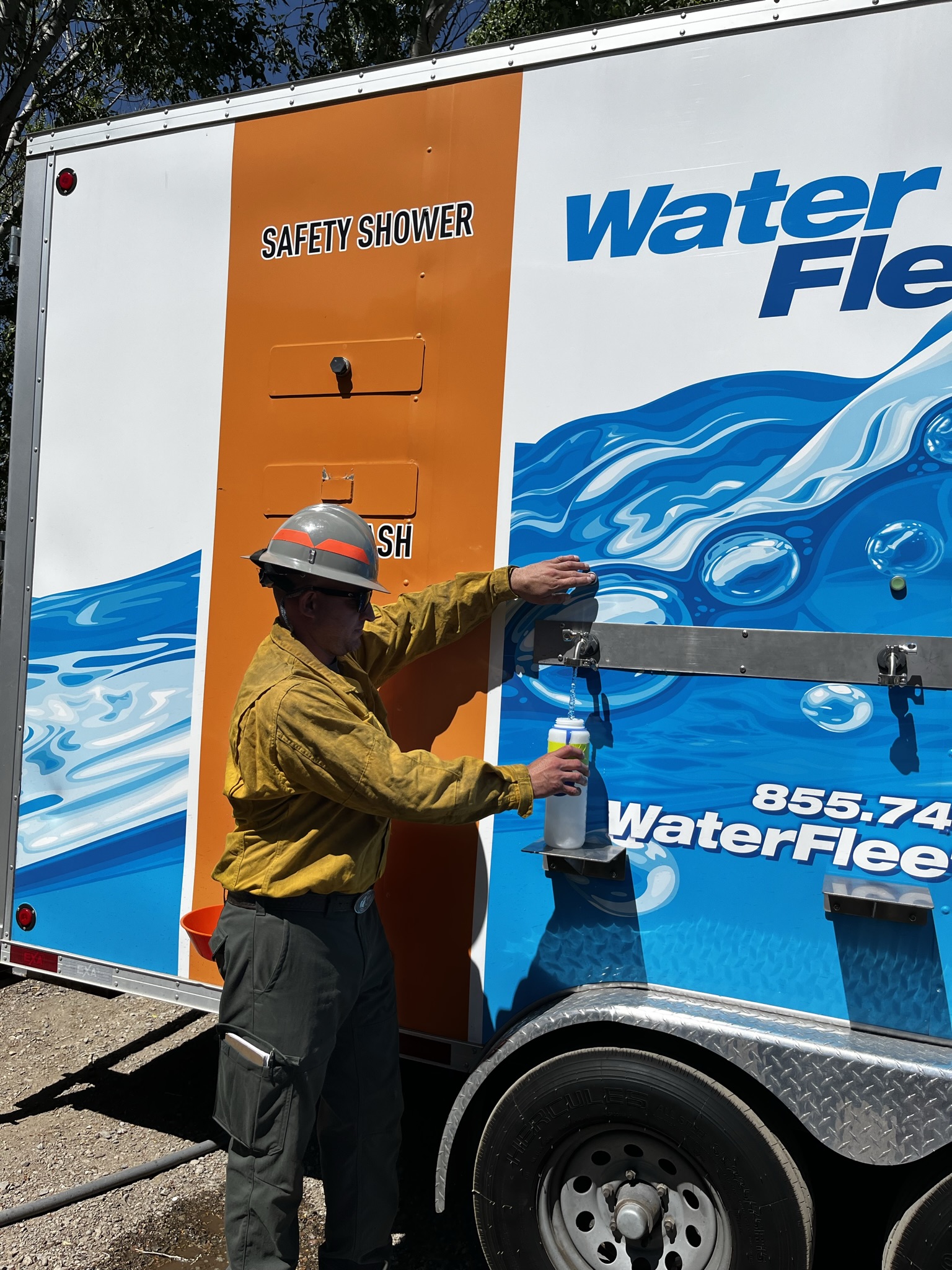
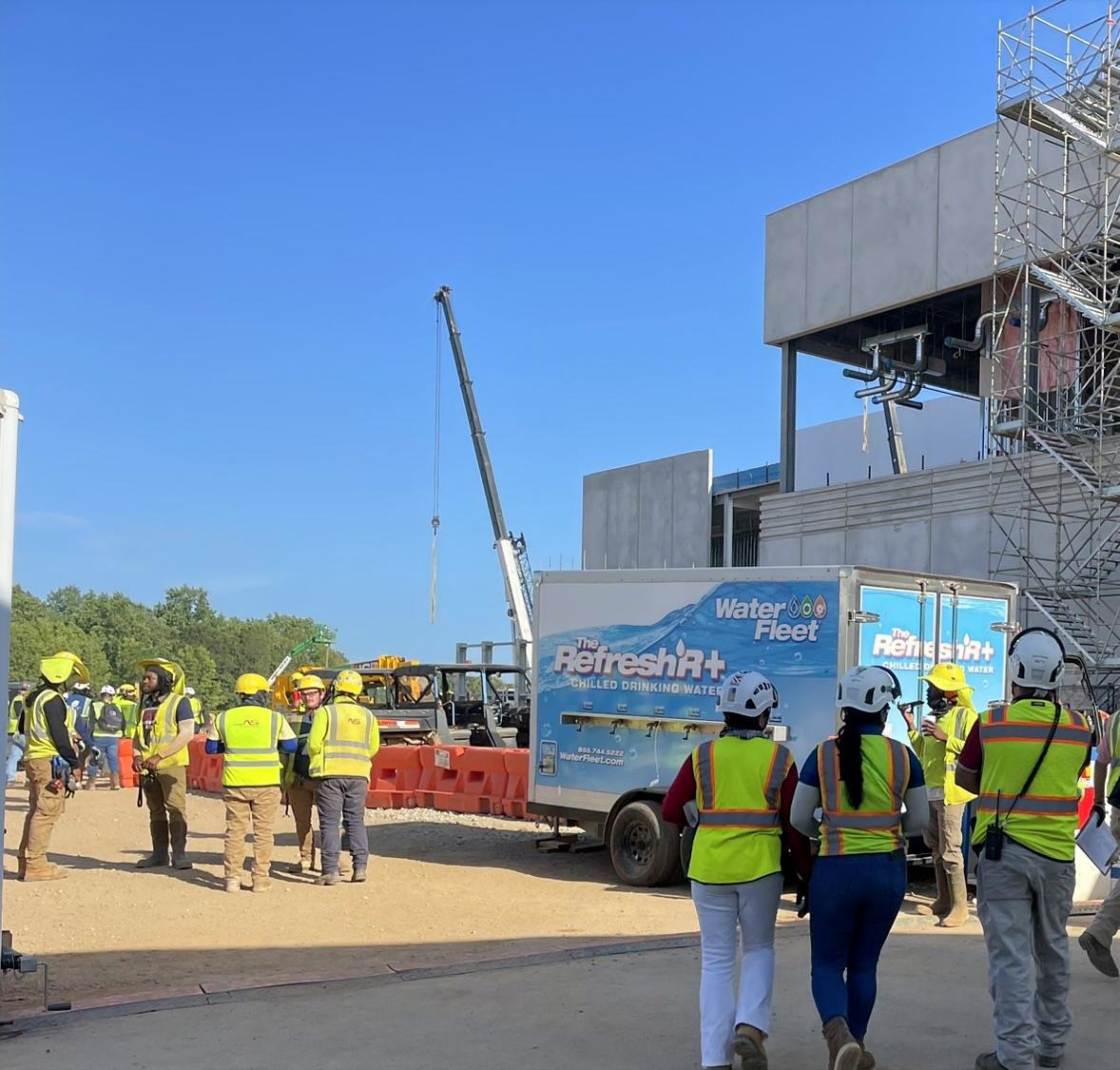
- Distribute clean water for human use onsite
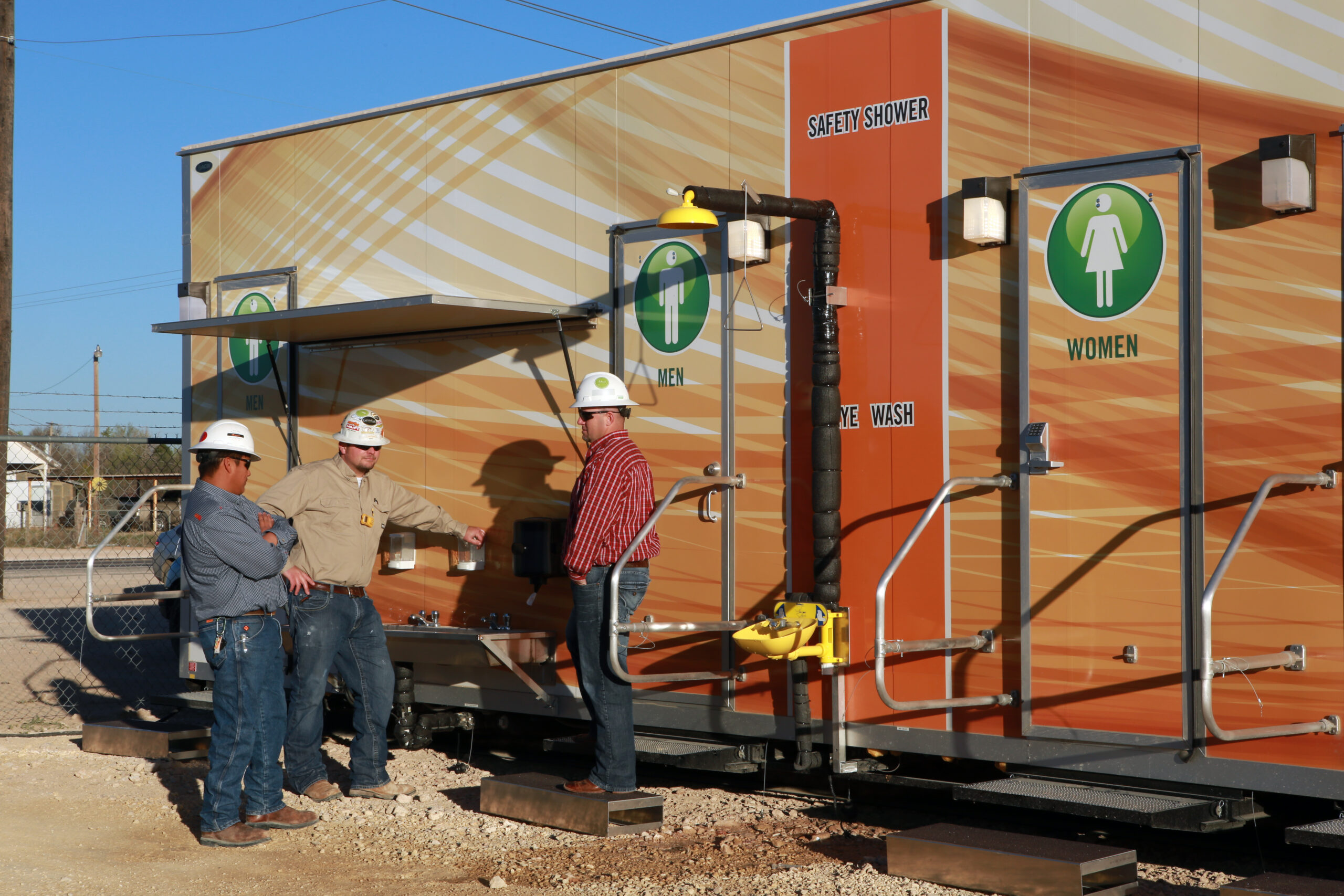
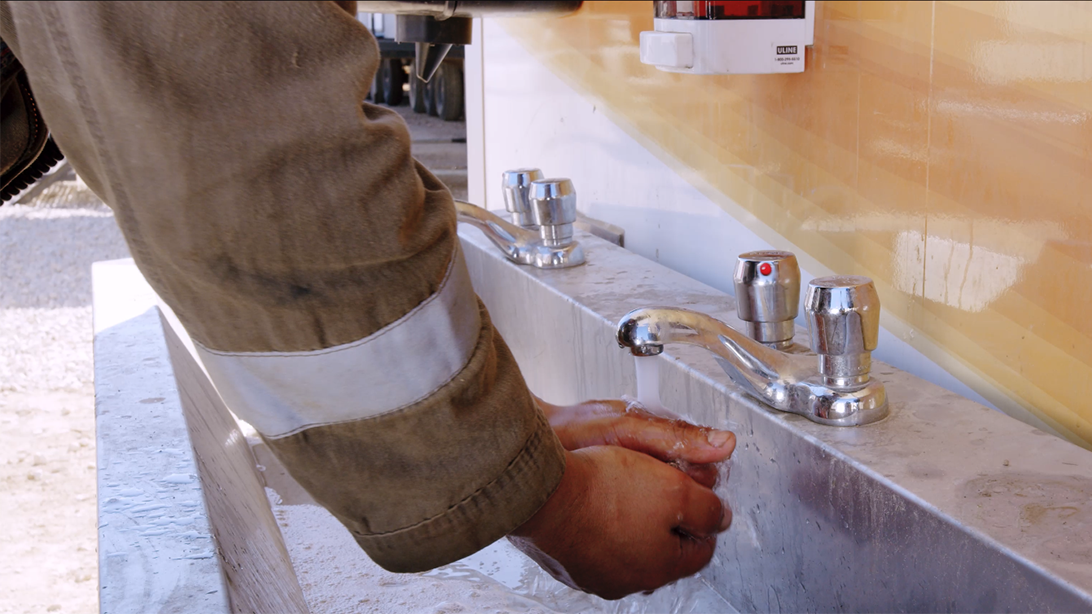
- Collect wastewater from sinks, showers, toilets
- Process that wastewater into industrial-grade reuse water for drilling, dust control, or irrigation
No trucking. No waste. Just smart, repeatable cycles that reduce your site’s footprint while improving crew quality of life.
Case Study: Circular Economy in Pecos, Texas
In West Texas, WaterFleet supported a 25-person work camp with no municipal infrastructure. We:
-
Treated local source water to potable standards
-
Eliminated the need for bottled water
-
Collected and treated wastewater onsite
-
Returned that water to the drilling operation
The result?
-
Tens of thousands of gallons of fresh water saved
-
Significant reduction in truck traffic and emissions
-
Over $6,300/month in operational savings
The Business Case for Circular Thinking
Adopting a circular economy on remote worksites doesn’t just check a sustainability box, it drives real business impact:
-
Lower operational costs
-
Fewer truckloads and less downtime
-
Greater safety and compliance
-
Stronger reputation with stakeholders
Whether you’re working in construction, energy, or disaster response, WaterFleet gives you the infrastructure to close the loop.
Want to See a Circular Economy at Work?
Let’s talk about how we can bring sustainable, onsite water and waste systems to your next project.
Contact WaterFleet to find out how our mobile utility infrastructure makes the circular economy possible—anywhere.

Recent Comments